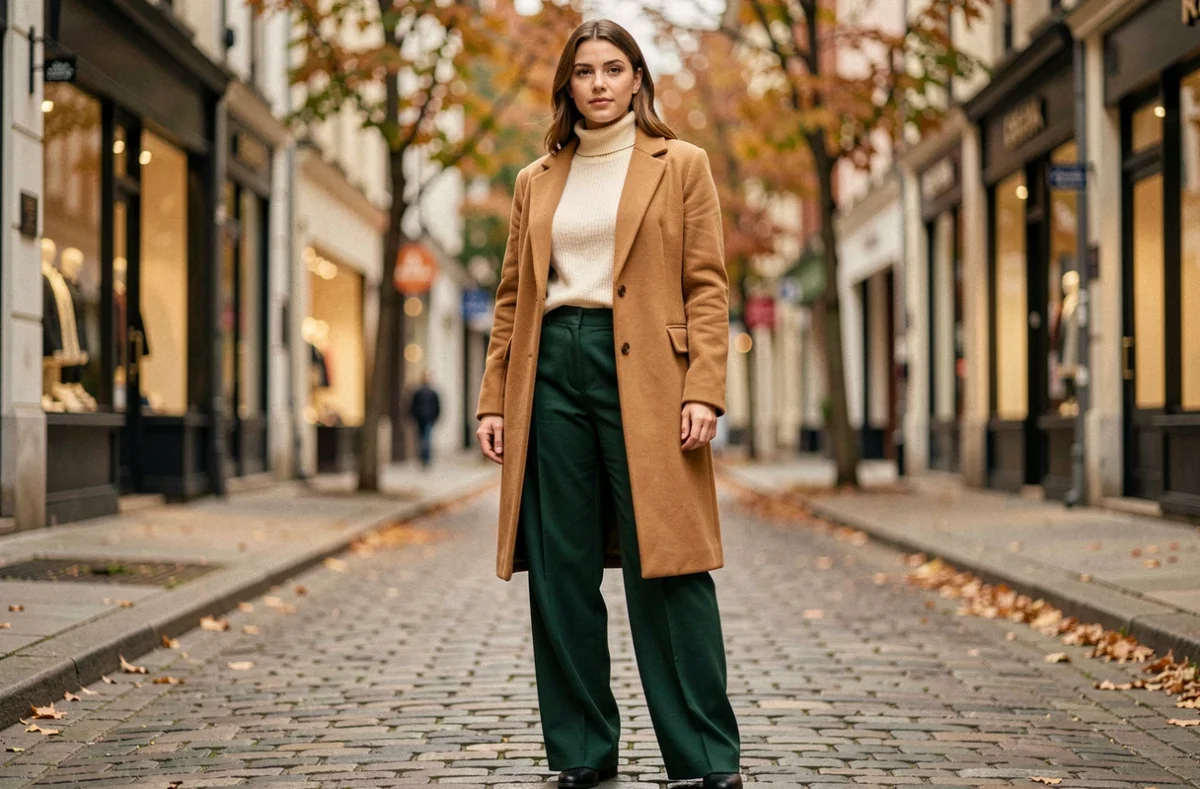
The autumn-winter 2026-2027 fashion is structured around three axes visible in the latest runway shows: the return of textured materials like leather and lace, a palette of saturated colors, and silhouettes that elongate the line through the play of proportions. These fashion trends of the season also reflect a European regulatory context that is beginning to impact collections.
Digital passport and textile regulation: what changes for clothing this season
The European Commission launched a register related to the Digital Product Passport in July 2026. Brands will gradually need to document the composition and lifecycle of their items, ahead of specific eco-design rules for textiles expected in 2027.
This traceability requirement changes the game for autumn-winter collections. Blended materials (polyester-cotton, acrylic-wool) become more expensive to document, prompting some brands to simplify their compositions.
Since July 19, 2026, the European ban on destroying unsold goods applies to clothing, accessories, and shoes from large companies. Stocks must be directed towards resale, donation, repair, or refurbishment. For those following La Télé de Gauche’s fashion articles, this regulatory shift partly explains why collections are tightening around more durable pieces and noble materials.
The regulation also directly targets ultra-fast fashion and its promotion, redistributing the cards between traditional brands and fast-renewal players.

Lace and leather: the key materials for autumn-winter 2026
Two materials dominate the runways this season. Lace returns in structured versions, far from the exclusively romantic register. It can be found on high collars, long sleeves, and midi skirts worn in layers with more raw pieces.
Leather, on the other hand, asserts itself in various forms:
- The soft leather trench, worn open and belted, replaces the classic trench in autumn-winter wardrobes. Its long cut elongates the silhouette without a bulky effect.
- The leather skirt, straight or slightly flared, is worn with thick knits. The contrast between the rigidity of leather and the softness of knit creates a sought-after visual balance.
- Grained leather accessories (wide belts, structured bags) complete outfits without overwhelming, playing on textures rather than colors.
The combination of lace and leather in the same look works as long as a tight palette is maintained. Black, deep burgundy, and chocolate brown allow for mixing these two materials without falling into costume territory.
Saturated colors and street style: the fashion palette of this season
The colors of the season move away from the neutral tones that dominated previous collections. Vermilion red, cobalt blue, and emerald green appear on entire pieces, not just as touches of accessories.
This trend towards bold colors is also reflected in the street style observed during fashion weeks. Saturated monochrome outfits, worn head to toe, constitute one of the most striking proposals. The principle is simple: a single bright color, expressed in different textures (knit, technical fabric, leather) to avoid a uniform effect.
Pairing bright colors with wardrobe basics
Wearing a bright red dress or cobalt blue pants requires a sober counterpoint. A black coat, gray turtleneck, and shoes in neutral tones serve as an anchor. One strong color piece per outfit is enough to catch the eye without tipping into excess.
Accessories follow the same logic: a bag or scarf in a saturated tone can transform an entirely black outfit. This season’s street style shows that this approach works better than multiplying bright shades.
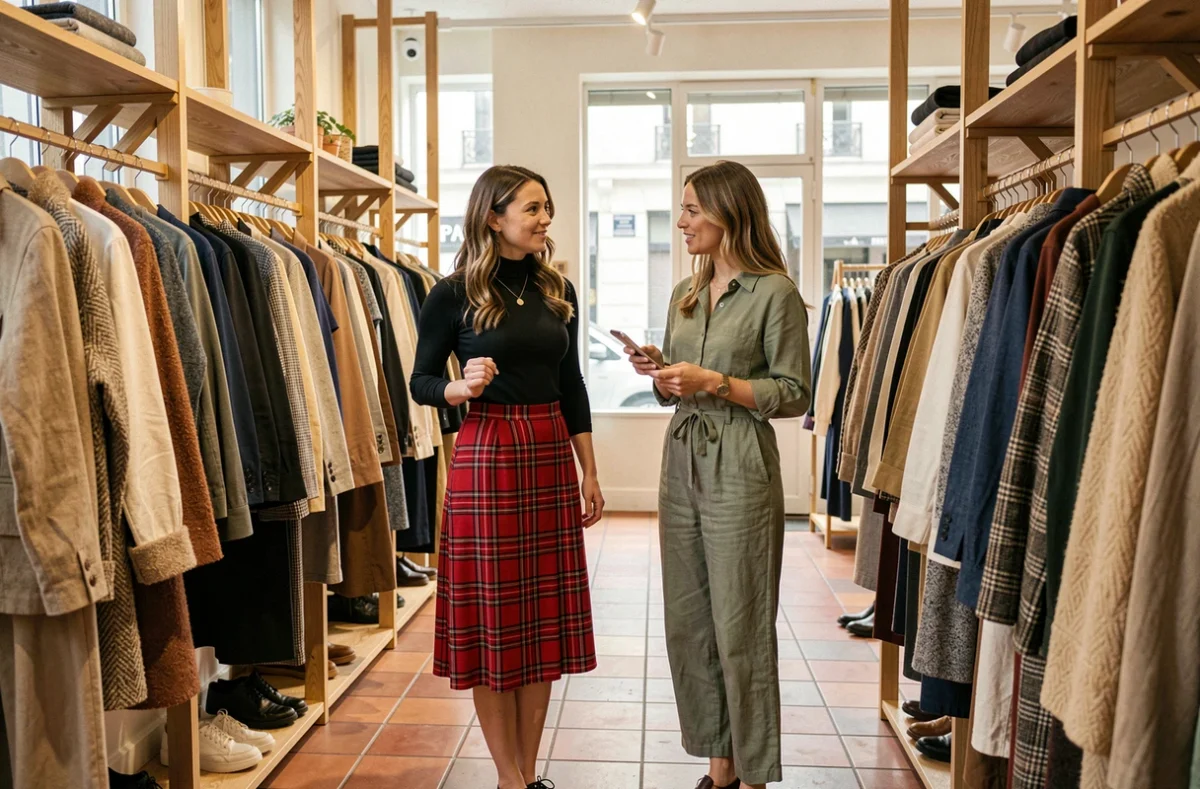
Elongated silhouettes and extra-long sleeves: the trendy cuts for autumn-winter
Proportions are changing this season. Extra-long sleeves, extending several centimeters beyond the wrist, have appeared in several houses during the autumn-winter shows. This cut alters the perception of arms and creates a fluid line that extends the silhouette.
The cape is making a comeback on the runways, a piece long associated with a theatrical register. In its current version, it is worn over fitted outfits and plays the role of a jacket or light coat.
Long skirts and dresses contribute to this movement. The midi length, just below the knee or at the calf, dominates. It pairs with high boots for a continuity effect between the shoe and the garment, without visual break.
Second-hand and circular fashion: an underlying trend
Beyond cuts and materials, second-hand is establishing itself as a full-fledged purchasing channel for seasonal clothing. McKinsey’s State of Fashion 2026 confirms this trajectory: circular fashion goes beyond simple clearance to become a purchasing reflex, even for trendy pieces like leather or designer accessories.
This evolution aligns with regulatory constraints on unsold goods. Brands that integrate resale and refurbishment into their model are no longer doing so by marketing choice, but by legal obligation, which accelerates the normalization of second-hand in everyday wardrobes.
The autumn-winter 2026-2027 fashion trends are distinguished by this convergence between aesthetics (textured materials, saturated colors, elongated silhouettes) and the European regulatory framework. The digital product passport and the ban on destroying unsold goods will continue to shape collections in the upcoming seasons, well beyond just the choice of colors or cuts.