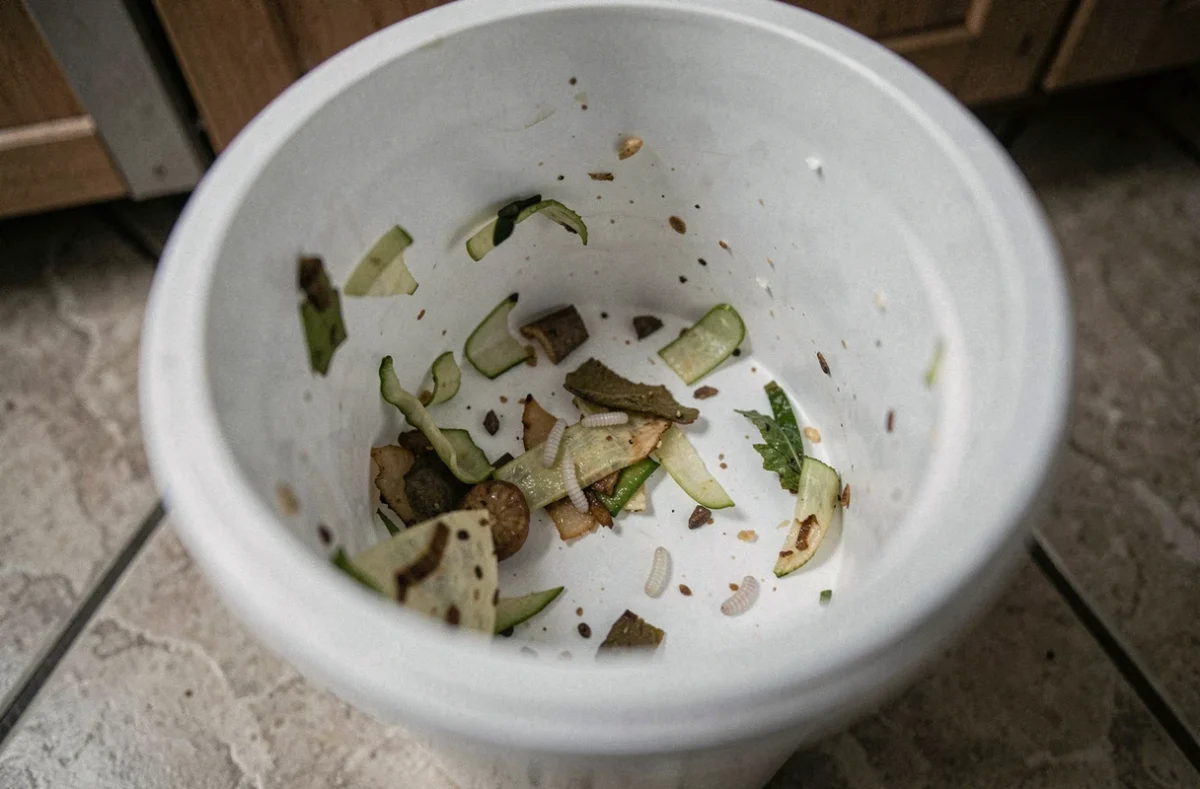
Calliphora, Lucilia, or Musca domestica larvae can colonize a bin in less than 24 hours as soon as the temperature exceeds the critical threshold. Preventing and eliminating maggots in the trash relies on three distinct levers: removing the laying substrate, breaking the larval cycle through heat, and disinfecting without creating secondary chemical risks.
Chemical incompatibilities during trash disinfection
We regularly observe a dangerous reflex: combining white vinegar and bleach on the walls of a bin, or mixing an acidic descaler with a chlorinated product. These combinations release gaseous dichlorine, which is severely irritating to the respiratory tract.
Bleach should never be mixed with vinegar, ammonia, or a descaler. The rule is simple: only one active product per application, diluted in cold water, in a ventilated space. Rinse thoroughly before any second treatment.
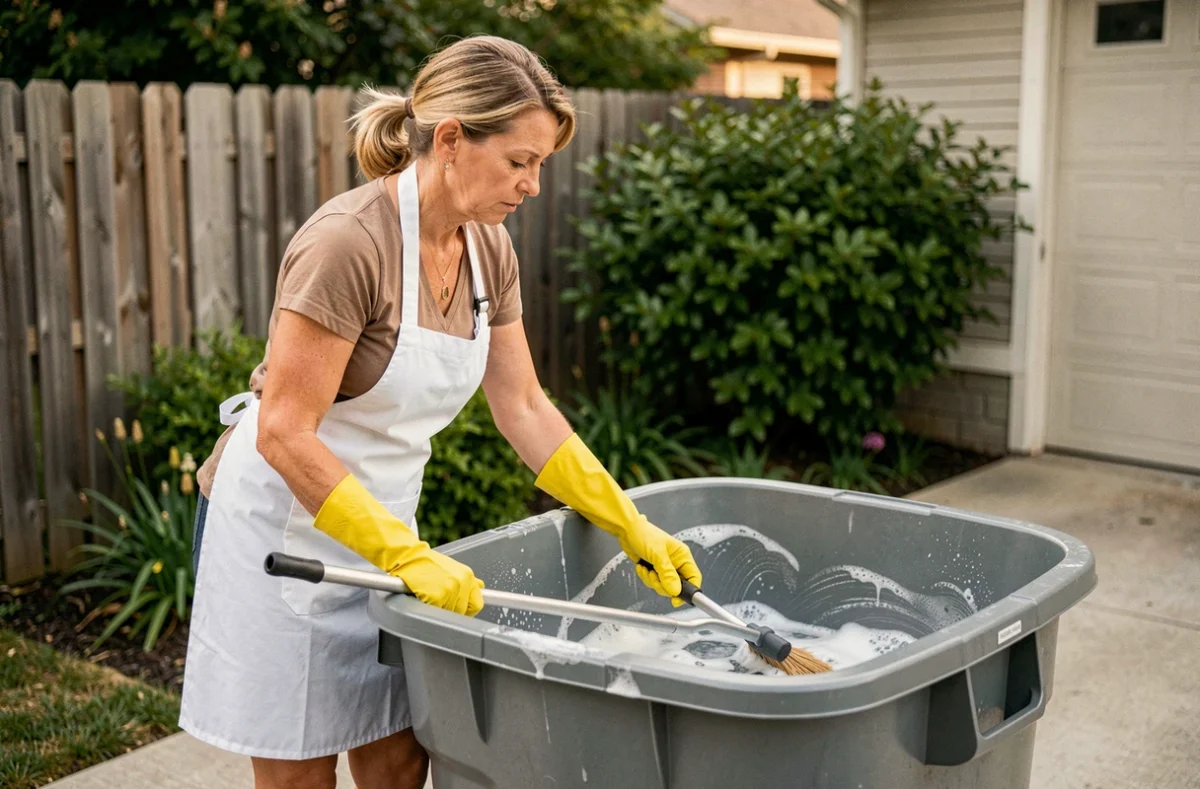
For outdoor bins, we recommend choosing between two exclusive protocols. The first: a diluted sodium hypochlorite solution, with a contact time of ten minutes, followed by a thorough rinse. The second: pure white vinegar sprayed on the walls, followed by complete drying in the sun. These two protocols should never be combined on the same day.
Common misconceptions about maggots in the trash often lead to overdosing or unnecessary mixtures that weaken the plastic of the bin without improving larvicidal effectiveness.
Laying substrate: removing organic waste from the gray bin
Source separation of organic waste has been widespread in France since January 1, 2024. Communities now offer individual composting, shared composting, voluntary drop-off points, or separate collection. Removing food scraps from the gray bin eliminates the main laying substrate for flies.
The impact on the appearance of larvae is direct. A trash bag containing only packaging, paper, or inert waste does not attract diptera. Wet organic matter, on the other hand, triggers laying within hours as soon as the lid is left ajar.
Compostable bags: check local regulations
Guidelines vary by municipality. Some accept certified compostable bags in their organic waste bins, while others require bulk or kraft paper. An unsuitable bag may be refused at the collection point, forcing it back into the gray bin and recreating the initial problem.
We recommend checking your intermunicipal collection regulations before investing in a batch of compostable bags. Newspaper remains a reliable alternative for wrapping scraps intended for the composter.
Frequency of disposal and management of the indoor bin
Reducing the time organic waste spends in the kitchen breaks the larval cycle before it starts. Flies lay eggs on decomposing material: if scraps are sent to the composter or drop-off point daily, the eggs do not have time to hatch.
Several communities are deploying bins with multiple collections per week to limit nuisances and odors. At the household level, this means that a small organic waste bucket emptied daily is more effective than a large bin emptied once a week.
Conditions that accelerate fly egg hatching
- Residual moisture at the bottom of the bag or on the walls of the bin: larvae need a humid environment to survive. A dry bin bottom quickly dehydrates them.
- High ambient temperature: above a certain threshold, the egg-larva cycle shortens considerably. In summer, placing the bin in the shade and sealing the lid tightly slows down laying.
- Absence of a physical barrier between the waste and the outside: a punctured bag, a poorly closed lid, or a worn seal is enough for flies to access the contents.
Elimination of maggots through thermal treatment
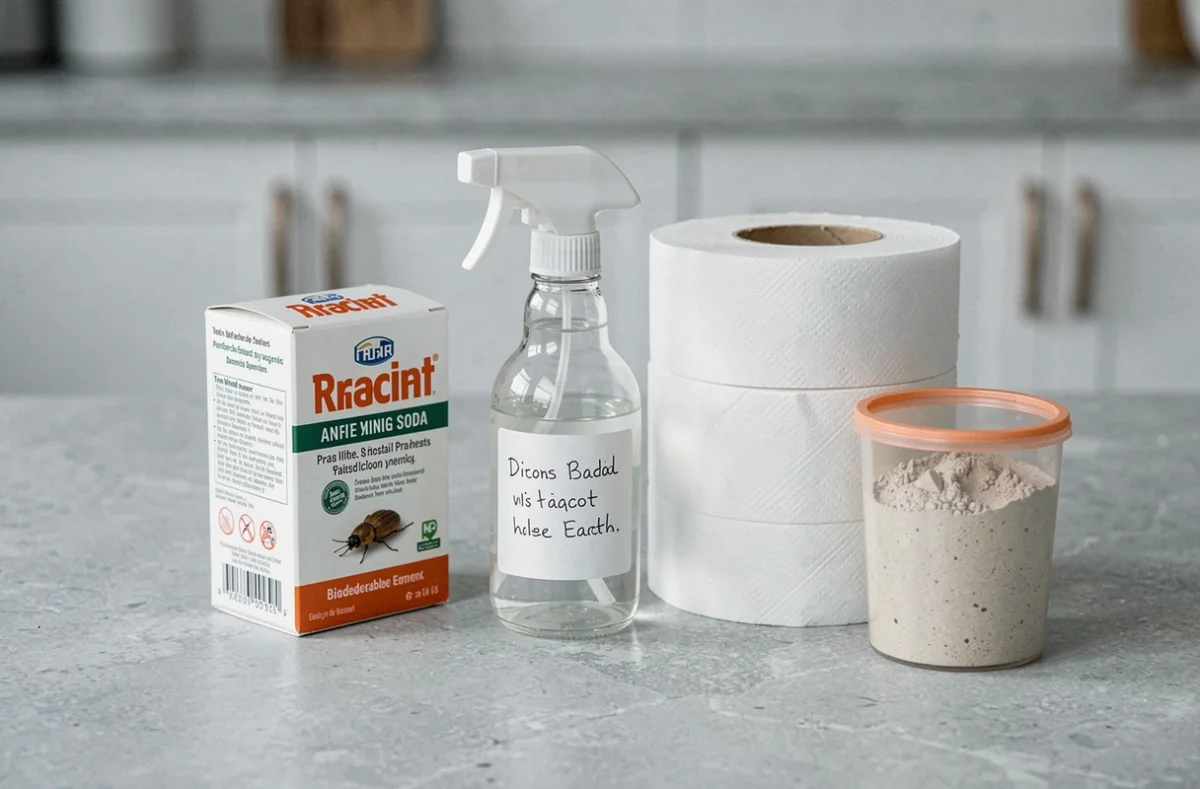
Boiling water remains the fastest and safest larvicide. Poured directly onto the larvae, it kills them in seconds through protein denaturation. No chemical residue, no risk of toxic mixing.
Pouring a liter of boiling water on the walls and bottom of the bin after each emptying eliminates eggs invisible to the naked eye. This simple gesture prevents the restart of the cycle between collections.
Complete drying after treatment
One point that public protocols neglect: drying. A rinsed bin left damp immediately recreates favorable conditions for laying. After the boiling water treatment, turn the bin upside down in the sun or wipe the interior walls.
A dry bin repels flies much more effectively than a disinfected but damp bin. Residual moisture is the main trigger factor, ahead of the presence of food residues.
Physical repellents and mechanical barriers against flies
Essential oils of peppermint or eucalyptus work as temporary olfactory repellents. A few drops on a cotton ball placed under the lid deter flies for a few days, but the effect fades quickly outdoors.
The most reliable barrier remains mechanical:
- An intact trash bag, without perforation, that completely wraps the waste and is tied before being placed in the bin.
- A hermetically sealing lid, with a seal in good condition. Pedal models prevent leaving the bin open during handling.
- A second bag encompassing the inner bin, which prevents any contact between the waste and the walls, eliminating the residues that flies detect.
These physical barriers complement thermal cleaning and the sorting of organic waste. No isolated method is sufficient: it is the combination of the three—substrate removed, dry bin, and blocked access—that permanently prevents larval colonization.
Managing maggots in the trash is not just a summer one-off. A protocol combining organic waste sorting, regular thermal treatment, and airtight sealing of the bin addresses the problem at its source, without accumulating incompatible chemical products in a closed space.