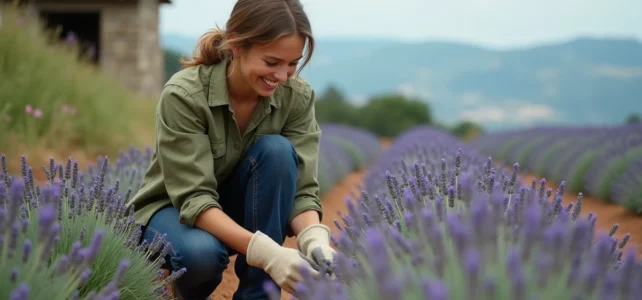
On a plot of a few thousand square meters in a medium mountain area, a project holder who cultivates fine lavender and lemon balm can generate a decent income, provided they process and sell through short circuits. The minimum area required to establish oneself as a farmer in PPAM is not a single figure: it depends on the type of plants, the method of valorization, and the targeted administrative status.
Dryer and processing workshop: the true determinant of PPAM area
We often talk about cultivated area, but the question that conditions the viability of a PPAM farm is the processing capacity. An undersized dryer forces harvesting in small batches, which prolongs work and limits the marketable volume. Conversely, a well-calibrated drying and processing workshop allows for a satisfactory income from a modest plot.
Before looking for land, it is advisable to size the dryer according to the targeted plants. Aromatic plants (lavandin, clary sage) require quick drying at low temperatures to preserve essential oils. Aromatics intended for herbalism (thyme, rosemary, mint) tolerate slower drying but require more ground space per batch. The dryer dictates the cultivable area, not the other way around.
For a first installation, many project holders start with a self-built solar dryer covering about twenty square meters. This configuration limits the annual harvest to a few dozen kilos of dried plants, making a cultivated area significantly less than one hectare viable.
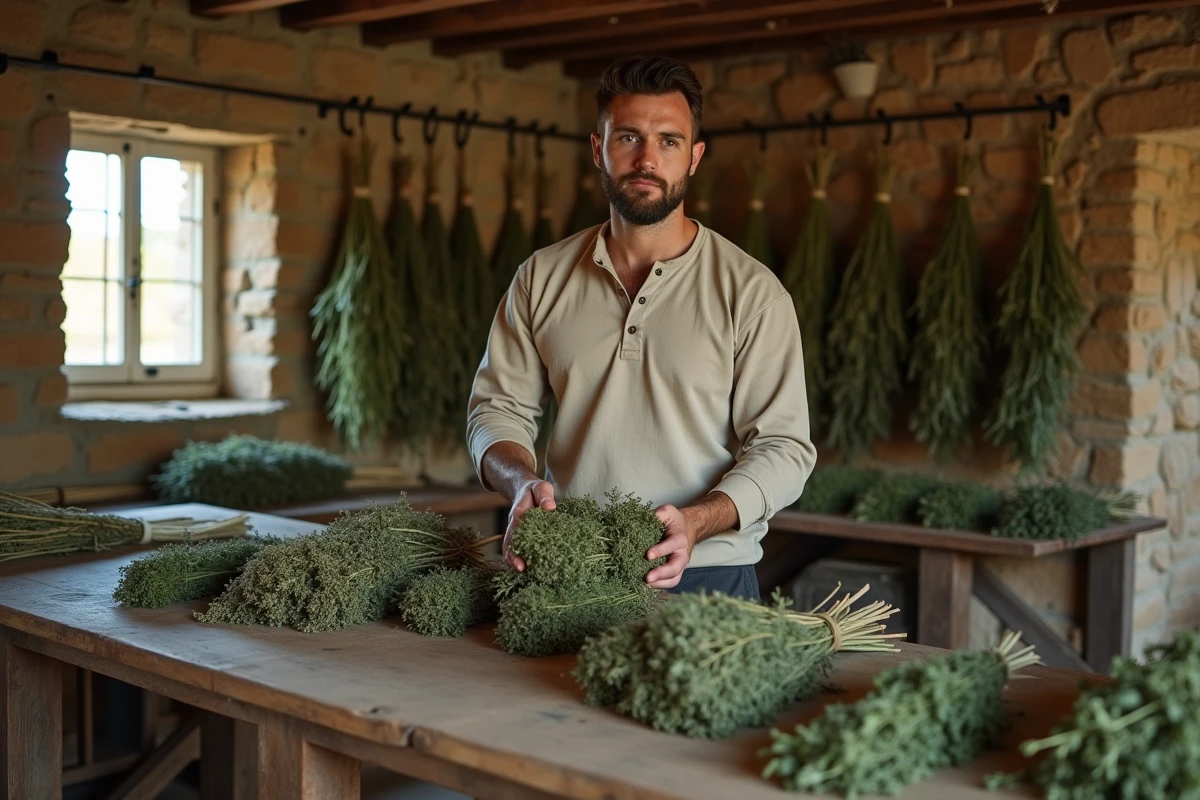
Feedback varies on this point, but most recent organic PPAM installations combine a production plot with a processing area to sell herbal teas, hydrosols, or cosmetics. It is this dual role (production and processing) that makes a minimum agricultural installation area on Astuces Business much lower than the usual thresholds for large crops.
SMA threshold and agricultural status: what regulations impose on PPAM producers
To obtain farmer status and affiliate with the MSA, one must reach the Minimum Area of Obligation (SMA). This threshold varies by department and type of production. In PPAM, the SMA is generally lower than for cereals, because the added value per hectare is higher.
The SMA in PPAM is often well below one hectare. In some departments, a few thousand square meters are sufficient to reach this threshold, provided that the production is indeed marketed and that agricultural income is demonstrable.
A common trap: confusing the SMA with the area needed to live from one’s activity. Reaching the SMA opens rights (MSA, CAP aids, access to land through SAFER), but does not guarantee an income. One can be affiliated as a farmer on a very small area and not generate enough to earn a living if marketing is not in place.
Installation pathway and access to land
The installation pathway (PPP, then validation by the Installation Welcome Point) requires presenting a coherent business plan. For small area PPAM projects, departmental commissions examine the overall viability of the operation, including income related to processing and direct sales.
- Contact the agricultural chamber of the targeted department to know the local SMA in PPAM and the specific eligibility criteria
- Include in the business plan investments in the dryer and workshop, not just land
- Identify certifying training programs (BPREA, CS PPAM) that facilitate access to the Young Farmers Grant and CAP aids
Micro-surface PPAM model: combining production, hosting, and training
The recent trend in France shows that many PPAM projects are established on very small areas by combining several activities. The CIVAM Occitanie network offers training such as “Welcoming on your farm” and “Managing your farm through cost calculation,” which illustrate this approach. Viability is considered at the scale of the overall activity of the farm, not just the cultivated plot.
Specifically, on an area of less than half a hectare of PPAM, one can combine:
- Direct sales of herbal teas, hydrosols, and cosmetics processed on-site
- Educational hosting (farm visits, workshops on aromatic and medicinal plants)
- Short courses or training on harvesting, drying, or distillation
- Sales through short circuits (markets, AMAP, producer shops)
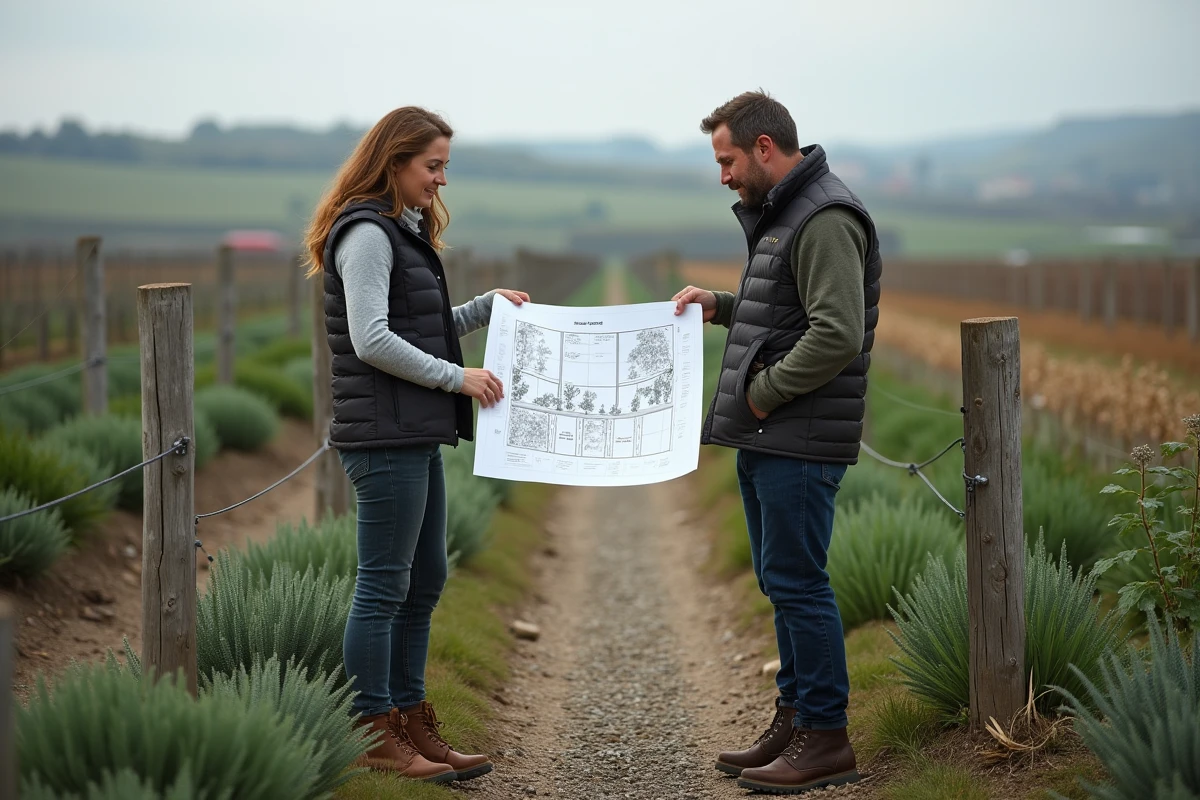
This multi-activity model radically changes the profitability calculation. The PPAM production area becomes a support for activity, not the sole source of income. A project holder who sells workshops on the farm or training on medicinal plants can live comfortably on a plot that most conventional farmers would consider insufficient.
Choice of species and technical itinerary: adapting the area to the PPAM farm project
The choice of plants directly conditions the necessary area. Aromatic plants like lavandin require more land to achieve a profitable harvest volume in essential oil. Aromatic and medicinal plants intended for herbalism (lemon balm, chamomile, verbena) offer better valuation per dry kilo, allowing work on smaller areas.
Prioritizing high value-added species reduces the area needed to achieve a viable income. Saffron, lemon balm, or certain rare medicinal plants sell at prices that more than compensate for a low production volume.
The technical itinerary also plays a role. Organic farming, with the corresponding certification, allows access to higher selling prices and specific aids (aids for organic conversion under the CAP 2023-2027). The additional labor cost associated with manual weeding is offset by commercial valuation, especially in direct sales.
The minimum area to establish in PPAM is not just a number of square meters. It is a calculation that integrates the dryer, the processing workshop, the marketing method, and complementary activities. A well-constructed project on a few thousand square meters, with an adapted dryer and a direct sales strategy, can be more profitable than a multi-hectare farm that sells wholesale without processing.