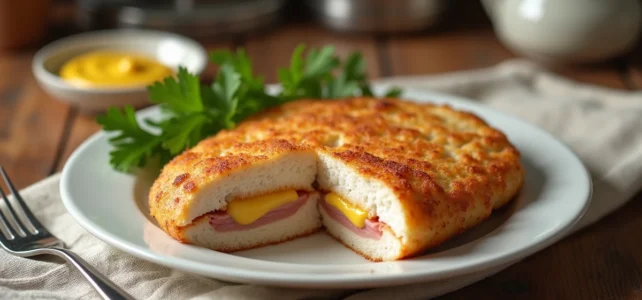
The microwave cordon bleu presents a specific problem: the breadcrumbs soften due to steam absorption, the cheese leaks if the internal temperature rises too quickly, and the final texture swings between rubbery and dry. Mastering these three variables requires a technical approach, not just a simple timer adjustment.
Microwave Power and Cooking Stages for Breaded Cordon Bleu
The majority of failures come from a single power setting at full capacity. A standard frozen cordon bleu weighs between 100 and 150 g, with a cheese core that melts at a temperature much lower than that required to stabilize the breading. Starting cooking at maximum power causes thermal shock: the cheese liquefies and breaks through the coating before the breadcrumbs have had time to dry.
We recommend cooking in two stages. The first stage, at medium power (400-500 W), allows for a gradual temperature rise in the core. Allow about two minutes for a defrosted cordon bleu, a bit longer for a product taken directly from the freezer. The second stage, at maximum power, lasts less than a minute and aims to dry the surface of the breadcrumbs.
The question of whether cooking cordon bleu in the microwave can compete with oven or pan cooking largely depends on this sequencing. Without it, the result is consistently disappointing.
The resting time after cooking (30 seconds, with the door closed) is not optional. It allows the cheese to slightly re-stabilize and the residual steam to escape, which reduces the “soft breadcrumb” effect at the first bite.
Acrylamide and Prolonged Cooking: The Overlooked Health Risk in Breaded Products
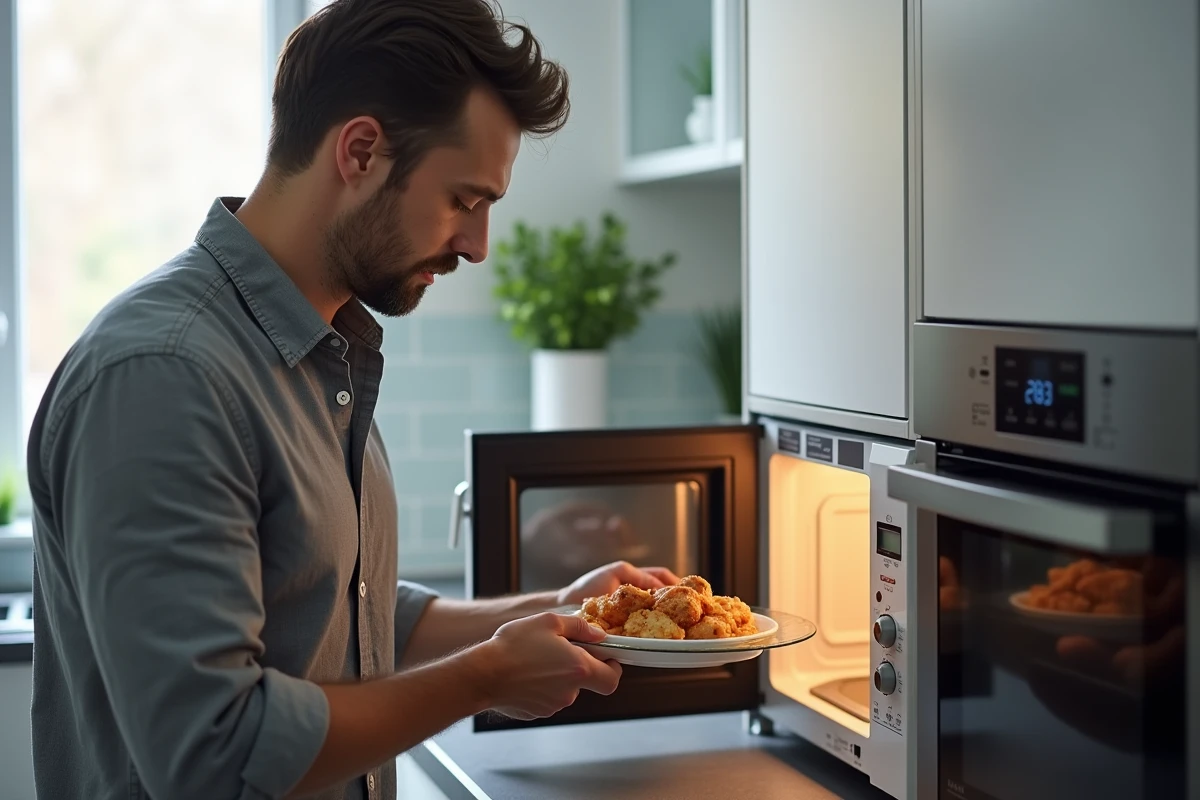
Microwave cooking guides focus on texture and taste. No competitor mentions the formation of acrylamide, a compound classified as a probable carcinogen, which develops in starchy foods subjected to high temperatures.
The breadcrumbs of a cordon bleu contain starch and reducing sugars. Prolonged microwave cooking beyond the necessary time promotes the formation of acrylamide in the breading, even if the temperatures reached are lower than those of frying. The phenomenon intensifies when the product is left too long at high power, or when one tries to “brown” the breadcrumbs by adding time.
The best practice is to strictly adhere to the stages described above and never extend the cooking time to achieve browning. The microwave does not produce an effective Maillard reaction: the breadcrumbs will not brown further, but the thermal exposure of the starch will continue to increase.
Limiting Exposure Without Sacrificing Cooking
- Do not exceed maximum power for more than 60 seconds on a single cordon bleu. Beyond that, the breading starts to concentrate undesirable compounds without gaining texture.
- Prefer a final pass of a few seconds under a grill or in a hot pan if you want a golden surface, rather than extending microwave time.
- Avoid reheating a cordon bleu that has already been warmed. Each heating cycle on a breaded product increases the cumulative exposure of the starch.
Container and Cooking Environment: The Details That Change Texture
The choice of container directly affects the circulation of steam around the cordon bleu. A flat plate without a cover allows steam to escape, which dries out the surface, but also the inside. A closed container retains too much moisture and turns the breadcrumbs into paste.
A microwave-safe container with a partially open lid is the best compromise. The partial opening allows excess steam to escape while maintaining a sufficiently humid atmosphere so that the escalope does not dry out.
The Trick of Having a Bowl of Water Nearby
Feedback from specialized forums, particularly on Marmiton, reports a noticeable improvement in texture when a small bowl of water is placed next to the cordon bleu during cooking. The water acts as a regulator of ambient humidity in the microwave. The air does not dry out abruptly, preserving the tenderness of the meat without soaking the breadcrumbs.
Fill a ramekin two-thirds full and place it next to the cordon bleu, not underneath. The goal is to temper the atmosphere, not to create a steam bath.
Reheating a Previously Cooked Cordon Bleu: Method and Common Mistakes
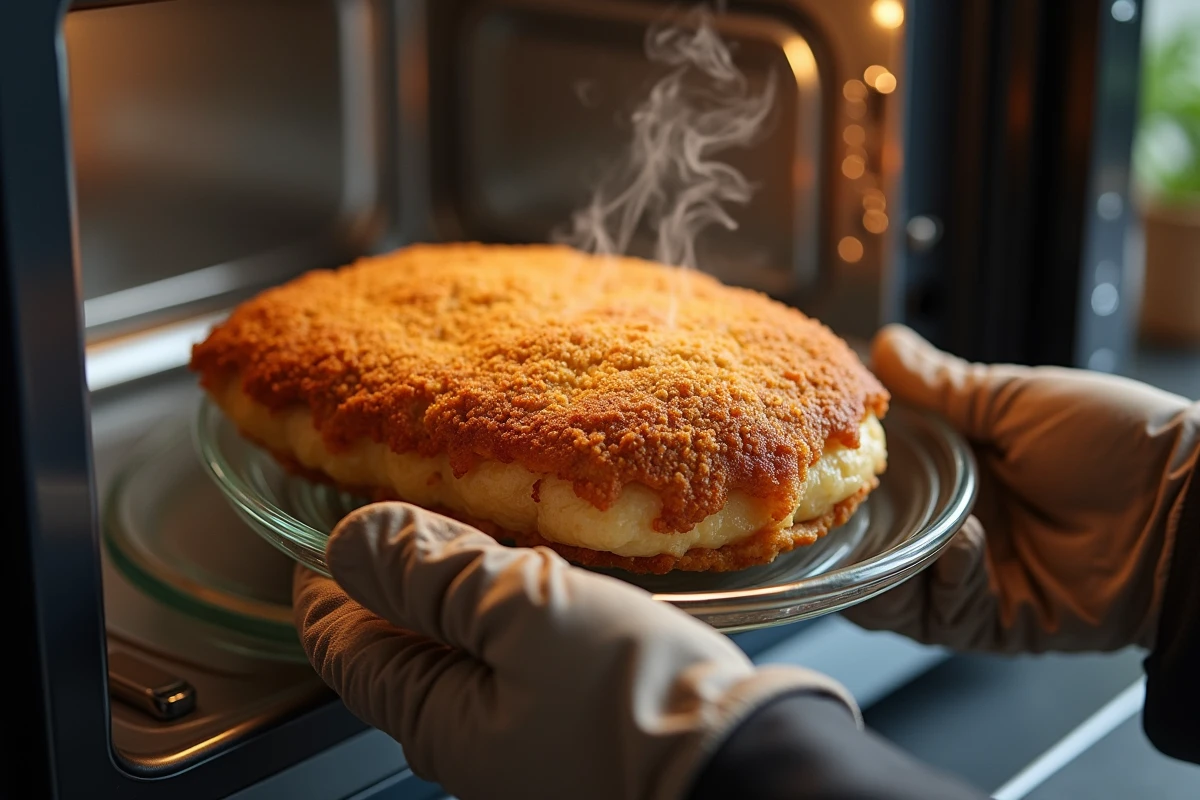
Reheating a previously cooked cordon bleu in the microwave requires even more precautions than the first cooking. The cheese has already melted once, the breadcrumb coating has lost some of its structure, and the meat has already undergone complete cooking.
Reheating should be done exclusively at reduced power, around 300-400 W, for a short time. The goal is to bring the core to a pleasant temperature without restarting a total melting of the cheese.
- Place the cordon bleu on a paper towel to absorb excess moisture escaping from the softened breadcrumbs.
- Do not cover the container: during reheating, steam is the direct enemy of the breadcrumbs.
- Check the temperature after 45 seconds. A previously cooked cordon bleu does not need more than a minute at moderate power.
Microwave-Safe Packaging: What the Regulations Say
Since January 2026, Regulation (EU) 2025/2789 requires manufacturers to clearly indicate on packaging the microwave compatibility and specific overheating risks for breaded meats. Check these mentions before reheating a cordon bleu in its original packaging. Non-compliant trays may release undesirable substances at high temperatures.
Cooking a cordon bleu in the microwave remains an exercise in precision rather than simplicity. Two power stages, an open container, a bowl of water for support, and a systematic resting time: these four parameters transform a mediocre result into a perfectly acceptable meal, without the risks associated with blind overheating.